Krishna Garden Complex,
A/65, Jagamara Rd, Phase-II, Khandagiri, Bhubaneswar, Odisha 751020
 Mon-Sat: 9:00 AM -
07:00 PM
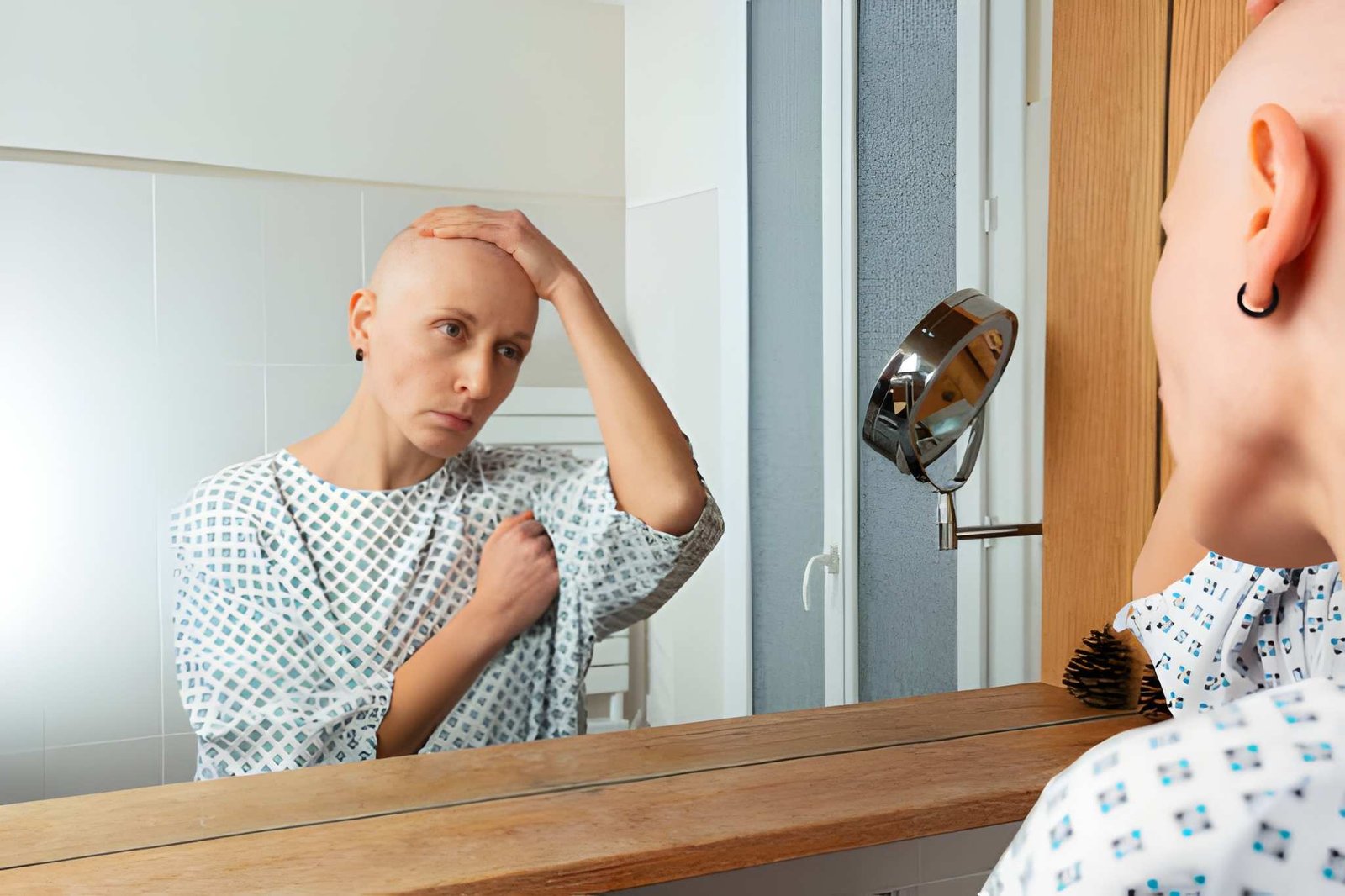
<p>Hair loss during cancer treatment is one of the most emotionally difficult parts of the journey. For many patients, it’s not just about appearance; it’s about identity. Hair is deeply personal, and when it starts falling out, it becomes a visible reminder of illness.</p><p>Not all cancer treatments cause hair loss, but many chemotherapy drugs do. These medicines target rapidly dividing cells. Cancer cells divide quickly, but so do hair follicle cells. As a result, hair thinning or complete loss often begins two to three weeks after starting treatment.</p><p>The first thing patients should know is this: hair loss from chemotherapy is usually temporary. While that doesn’t make it easier emotionally, it offers hope.</p><p>Preparation helps. Some patients choose to cut their hair short before treatment begins, while others prefer shaving their head once shedding starts. There is no “right” choice, only what feels empowering for the individual.</p><p>Scalp care becomes important. Using mild shampoos, avoiding heat styling tools, and staying away from harsh chemical treatments can reduce irritation. The scalp may become sensitive during therapy, so gentle handling matters.</p><p>Cold cap therapy, where the scalp is cooled during chemotherapy, has shown effectiveness in reducing hair loss for certain cancers. However, it is not suitable for everyone and should be discussed with the oncology team.</p><p>Head coverings can provide comfort and confidence. Patients may try scarves, caps, turbans, or wigs. Modern wigs look natural and are made from breathable materials. Some individuals also choose to embrace baldness as a symbol of strength.</p><p>The emotional aspect should never be underestimated. Hair loss can trigger feelings of vulnerability or loss of control. Support groups, counselling, and open conversations with family can help during this time.</p><p>Hair often grows back after treatment ends, sometimes with a different texture or colour. Growth usually begins a few weeks after therapy, though full thickness may take several months.</p><p>One important tip is to protect the scalp from sun exposure. Without hair, the skin burns easily, so sunscreen or hats are essential outdoors.</p><p>Cancer treatment requires strength in many forms. Managing hair loss is not about vanity; it’s about dignity and self-expression during a vulnerable time.</p><p>Hair loss is only a chapter in the journey. For many patients, regrowth becomes a quiet celebration of recovery and resilience.</p>
How to Manage Hair Loss During Cancer Treatment
By : Admin
Feb 05, 2026