Krishna Garden Complex,
A/65, Jagamara Rd, Phase-II, Khandagiri, Bhubaneswar, Odisha 751020
 Mon-Sat: 9:00 AM -
07:00 PM
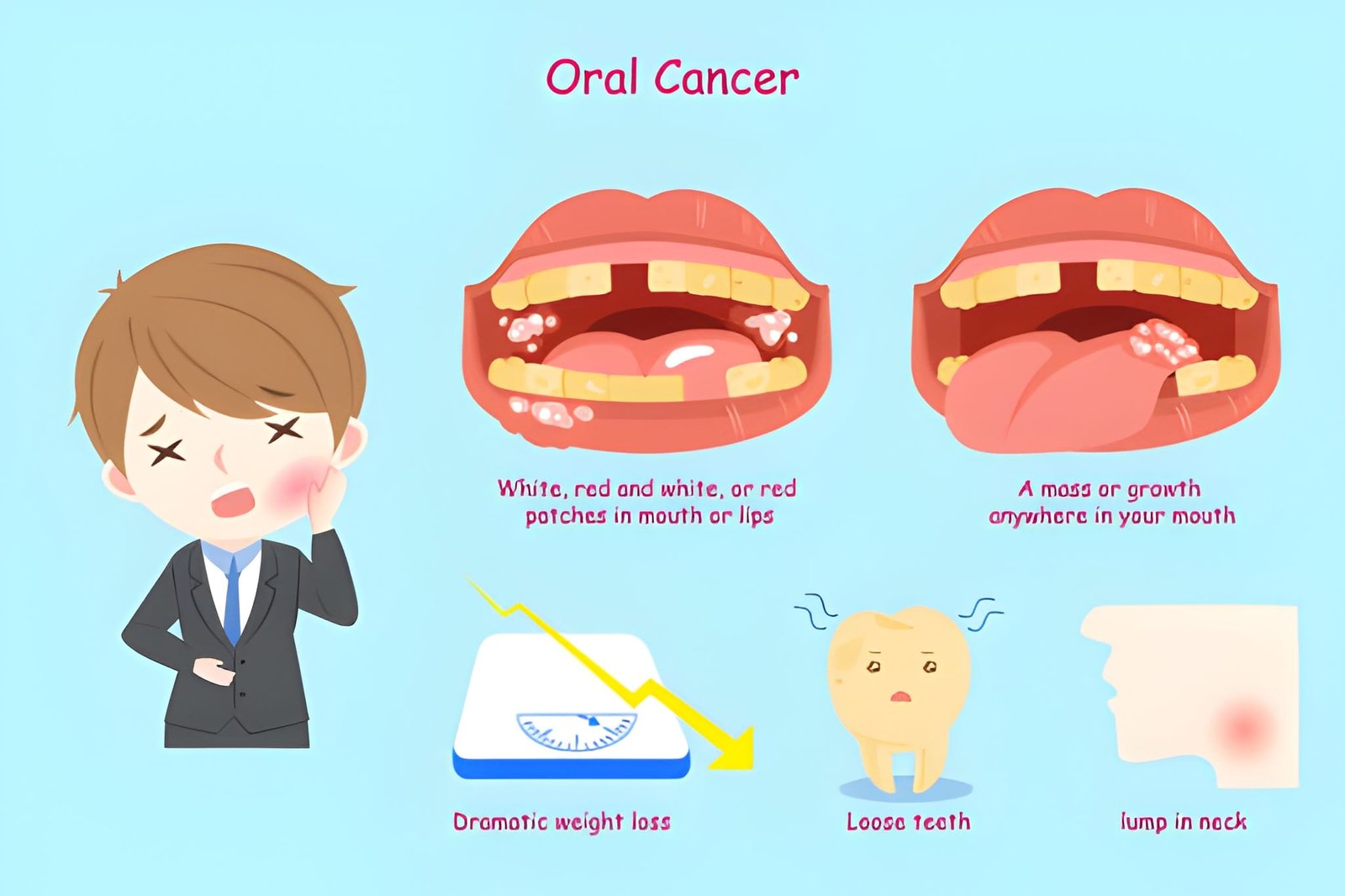
<p>For years, tobacco has been marketed as a habit, something social, stress-relieving, even culturally accepted in many parts of India. Whether it’s cigarettes, bidis, gutkha, khaini, or paan with tobacco, most users know it’s “not good.” But what many don’t truly realise is how directly and aggressively it affects the mouth, often long before any dramatic symptoms appear.</p><p>Oral cancer doesn’t usually start with unbearable pain. In fact, that’s part of the danger. It often begins silently, a small white or red patch inside the cheek, a tiny ulcer that doesn’t heal, slight thickening of tissue, mild burning while eating spicy food. Many tobacco users ignore these signs because they seem minor. Persistent lesions are often the first warning signs.</p><p>Smokeless tobacco users are at especially high risk. When gutkha or khaini is kept tucked inside the cheek for hours, the chemicals directly irritate the mucosal lining. Over time, this repeated chemical injury changes the cells. One early condition is oral submucous fibrosis, where the mouth gradually loses elasticity. People notice reduced mouth opening but often don’t connect it to cancer risk.</p><p>Smokers face risk too. Cigarettes and bidis expose not just the lungs but also the lips, tongue, and throat to carcinogens. The heat, tar, and toxic compounds damage cells repeatedly. Combining tobacco with alcohol multiplies the risk.</p><p>Early detection changes everything. Oral cancer, when caught in stage one, has a much better survival rate and often requires less aggressive treatment. But once it spreads to lymph nodes in the neck, treatment becomes more complex, involving surgery, radiation, and sometimes chemotherapy.</p><p>Dentists and ENT specialists are often the first to spot suspicious lesions. Unfortunately, many tobacco users avoid regular check-ups or continue using tobacco even after precancerous lesions are detected.</p><p>The uncomfortable truth is that oral cancer is largely preventable. Stopping tobacco significantly reduces risk over time, and the mouth has a remarkable ability to heal when given the chance.</p><p>If there’s one message every user should understand, it’s this: oral cancer does not arrive overnight, but it doesn’t wait forever either. Paying attention to persistent ulcers, patches, difficulty swallowing, or unexplained bleeding could save a life.</p><p>Tobacco doesn’t just stain teeth. It changes cells, and that’s the part most users don’t realise until it’s too late.</p>
Oral Cancer and Tobacco: What Most Users Don’t Realise
By : Admin
Feb 25, 2026